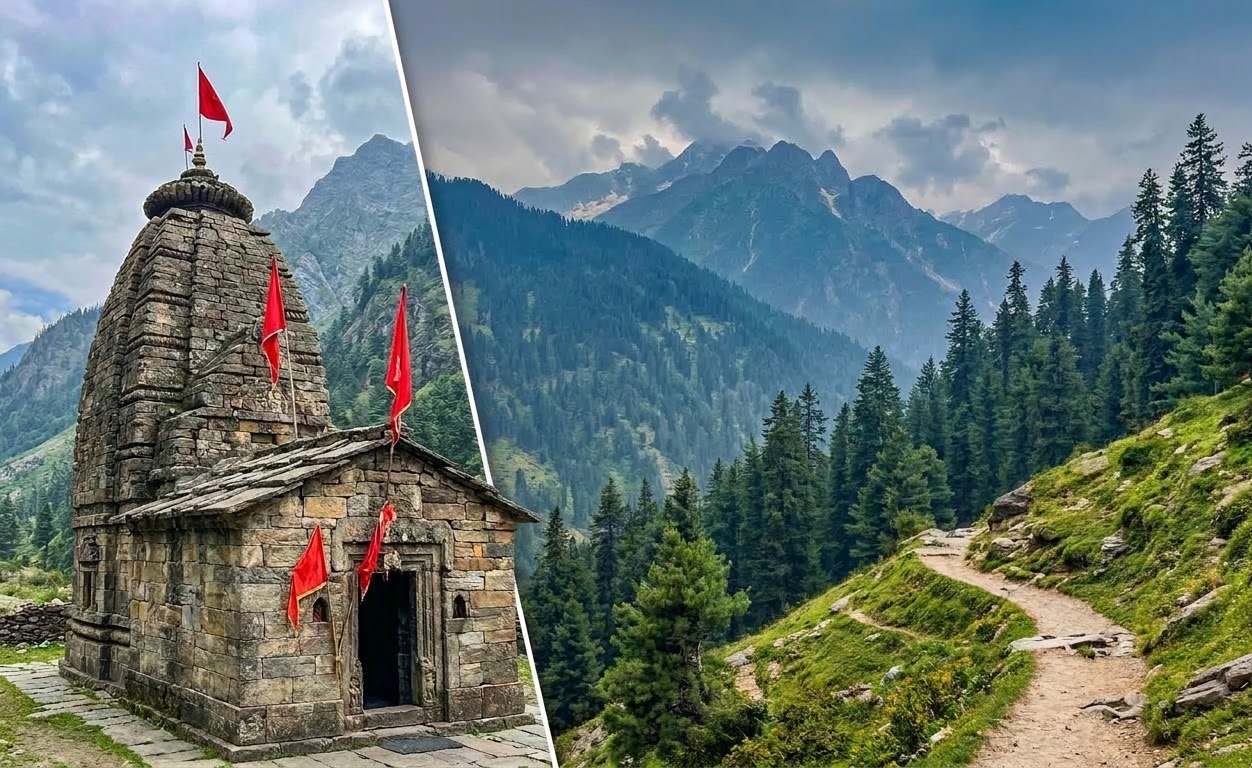
Imagine standing at an elevation of 8,500 feet, surrounded by a quiet, ancient forest of towering oak (Ban) trees, with crisp mountain air filling your lungs. This is the Banni Mata Temple. Tucked away in the scenic Bharmour region of Himachal Pradesh’s Chamba district, this site is far more than a simple shrine; it is a true mountain sanctuary. Dedicated to Goddess Mahakali, the temple rests at the foot of the majestic Pir Panjal range, offering a profound sense of peace that feels worlds away from the chaos of modern life. Whether you are a devout pilgrim or a traveler seeking solace in nature, Banni Mata welcomes you with breathtaking alpine views.
History & Mythology: Where Legends Come Alive
The story of Banni Mata is not just carved in stone; it is woven into the fabric of local folklore, with roots tracing back to the epic era of the Mahabharata. According to cherished regional legends, this sacred ground witnessed the final, arduous journey (Mahaprasthan) of the Pandava brothers and their wife, Draupadi, as they ascended toward the heavens. It is said that the goddess manifested here to soothe Draupadi’s mortal grief and exhaustion, transforming her pain into a lasting, protective divine presence.
Beyond mythology, the temple holds a deeply practical and spiritual role for the local Gaddi shepherd communities. For generations, these nomadic herders have paused their migratory journeys at this shrine to seek the goddess’s blessing before crossing the treacherous, high-altitude Kali Chho pass, which leads to the Lahaul valley. In local tradition, “Kali” honors the goddess, and “Chho” translates to waterfall, referencing the cascading waters near the route. The shepherds firmly believe that safe passage through the mountains is granted only with Banni Mata’s explicit permission.
Nearby Places to Explore
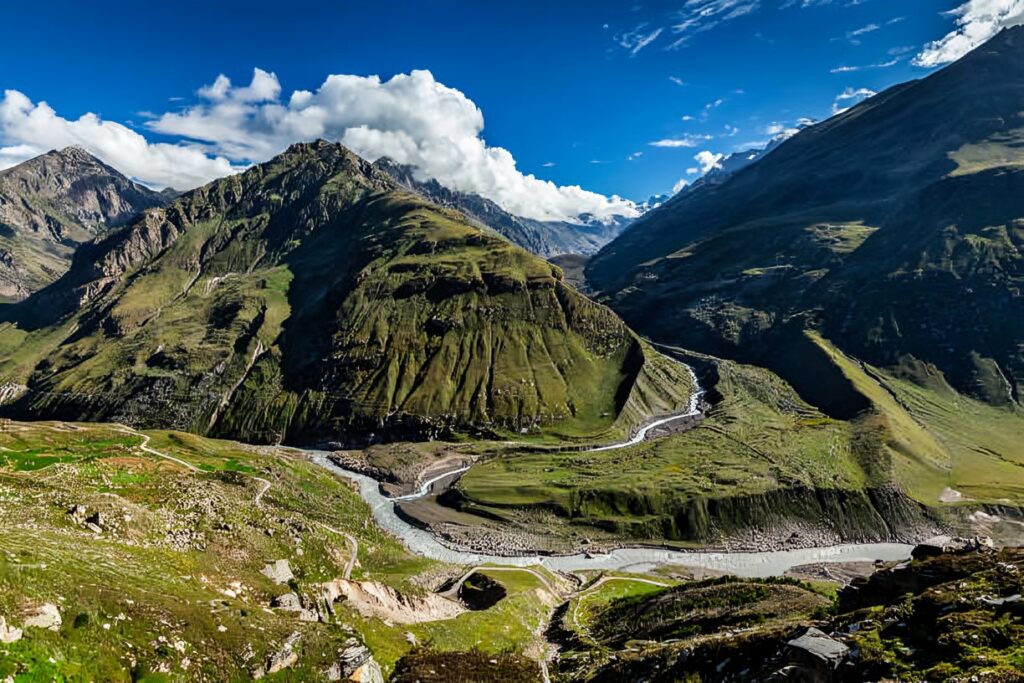
If you are making the trip to Banni Mata, the surrounding region is packed with equally mesmerizing spots worth adding to your itinerary:
- Bharmour Town (approx. 35–39 km away): The ancient capital of the Chamba kingdom, home to the famous Chaurasi Temple complex, a stunning cluster of ancient stone shrines echoing with centuries of history.
- Manimahesh Peak: The temple sits directly opposite this towering, snow-capped peak, revered as the abode of Lord Shiva and a major pilgrimage site.
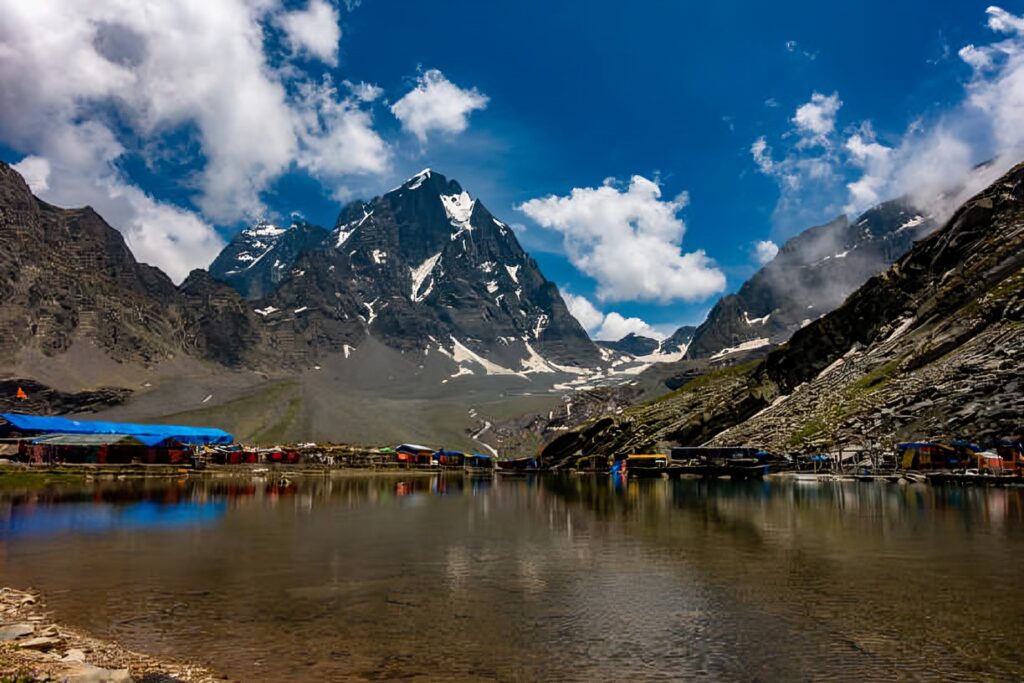
- Tundah Village & Lake: Located just a short distance from the temple, Tundah is a picturesque, tranquil village. A bit further lies the stunning, high-altitude Tundah Lake, a hidden paradise surrounded by lush meadows, perfect for photography and quiet reflection.
- Kali Chho Pass: For adventurous trekkers, this high mountain pass offers rugged beauty and a chance to walk in the footsteps of traditional Gaddi shepherds.
How to Reach the Temple
Reaching Banni Mata is part of the adventure. Here is the practical breakdown of your travel options:
- By Air: The nearest airport is Gaggal Airport (Kangra/Dharamshala), located approximately 185–190 km away. From there, you can hire a taxi or take a state-run bus toward Chamba.
- By Train: The most convenient railhead is Pathankot Railway Station, which is well-connected to major cities like Delhi and Amritsar. It sits about 180 km from the Bharmour region.
- By Road: The region is well-connected by motorable roads. Himachal Road Transport Corporation (HRTC) runs regular, scenic bus services from Pathankot and Delhi to Chamba and Bharmour.
The Best Possible Route: A Step-by-Step Guide
For the most seamless and scenic experience, here is the recommended route:
- Start at Pathankot: Take an early morning taxi or bus from Pathankot. The drive itself is gorgeous, winding through the foothills.
- Head to Chamba Town (approx. 90–100 km): Enjoy the 3 to 4-hour drive via Madhopur and Dalhousie. Take a short break in Chamba to stretch your legs and grab a local pahadi meal.
- Drive to Bharmour (approx. 60 km from Chamba): The road narrows but becomes dramatically more beautiful as you follow the winding mountain roads alongside the river.
- Proceed to Tundah Village (approx. 35 km from Bharmour): Continue your drive past Manda village until you reach Tundah. Recent road improvements mean vehicles can now get you very close to the trailhead.
- The Final Trek (4 km): From Tundah, the motorable road ends. You will embark on a gentle, highly rewarding 4-kilometer trek through dense oak forests. The walk takes about 1.5 to 2 hours at a leisurely pace, building anticipation until the temple finally comes into view.
Best Time to Visit
- The Spiritual Peak (August to early September): If you want to experience the temple’s vibrant cultural heart, visit during the Bhadrapad month of the Hindu calendar. This is when the annual Banni Mata Fair takes place. The atmosphere is electric with devotion, traditional music, and ancient rituals.
- The Pleasant Window (May to June & September to October): For travelers who prefer clear skies, comfortable trekking weather, and lush green landscapes, these months are ideal. The mountain views of the Pir Panjal range are at their most spectacular.
- When to Avoid: Heavy monsoon rains (mid-July to mid-August) can make the mountain roads slippery and the 4 km trek muddy. Winters (December to February) bring heavy snowfall, which can block the roads to Tundah and make the high-altitude trek challenging for casual visitors.